
The International Travel Packing List for First-Timers
Your first trip overseas doesn't need a giant suitcase. Here's what to pack, what to leave at home, and the small things first-timers wish they'd known.
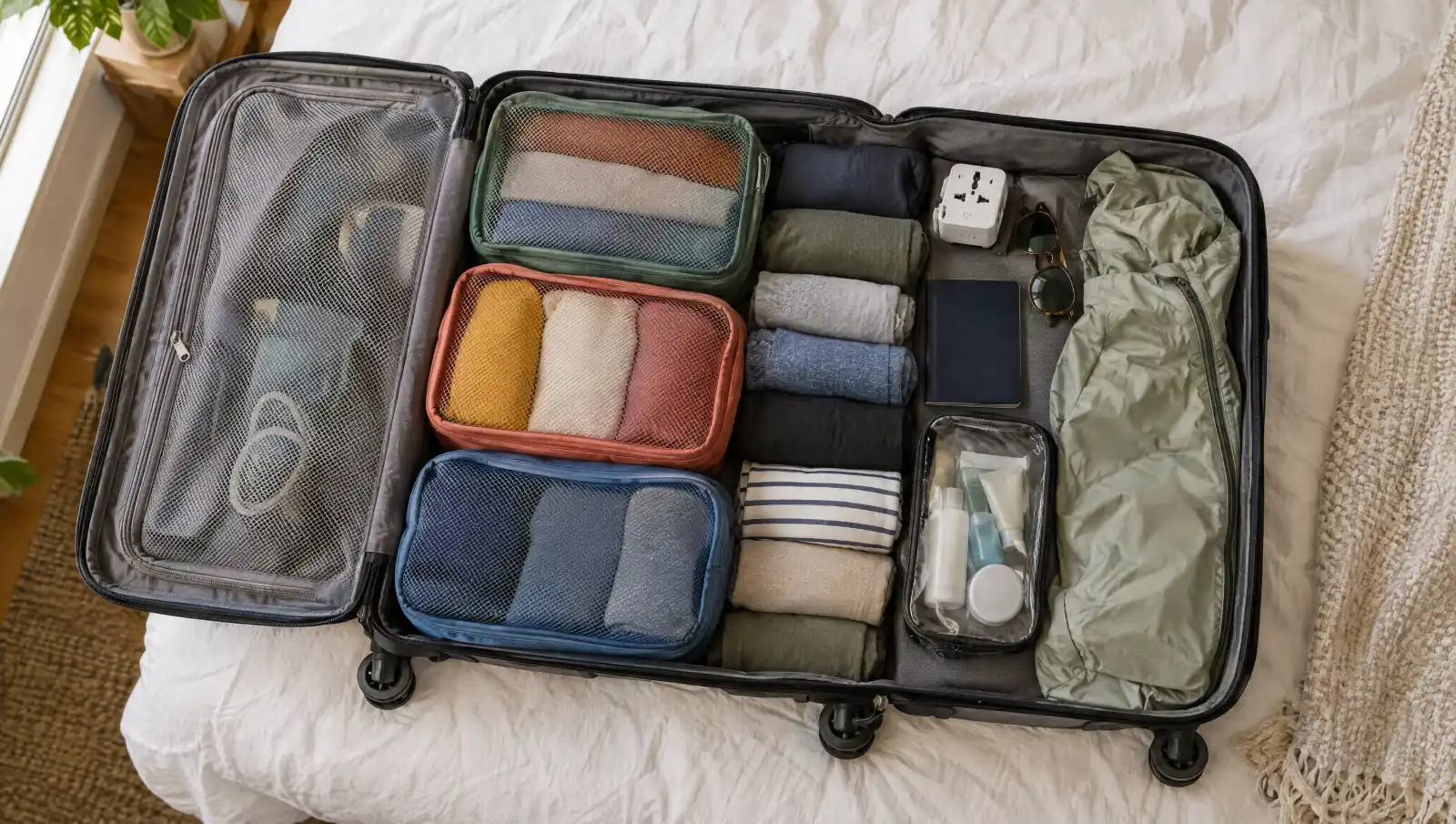
Packing for your first trip overseas feels different from packing for a weekend at the beach. You’re crossing time zones, dealing with airport security rules, plugging into different outlets, and you can’t run to your usual store if you forget something. The good news? You need less than you think. This international travel packing list covers what actually matters, what you can leave at home, and the small things first-timers wish someone had told them.
We help travelers get ready for trips to places like Egypt, Ireland, and Germany, so this international travel packing list includes notes for those trips too.
How to Use This International Travel Packing List
Think of your packing in three layers:
- Things you can’t replace: passport, money, cards, medications. These stay on you or in your carry-on, always.
- Things that make the trip comfortable: good shoes, the right layers, chargers.
- Everything else: extra outfits, “just in case” items. This is where most people overpack.
Start packing a week before you leave, not the night before. Lay everything out, then put back a third of the clothes. You’ll almost never miss them.
Travel Documents and Money
This is the most important part of any packing list, and the part you should check twice.
- Passport: check the expiration date now. Rules differ by country. Egypt requires your passport to be valid for at least six months. Germany and the rest of Europe’s Schengen area require at least three months beyond the date you plan to leave, plus two blank pages. To keep it simple, aim for six months of validity on any international trip.
- Visas and travel authorizations: U.S. citizens need a visa for Egypt, but not for short tourist visits to Ireland or Germany. The EU is also preparing to launch ETIAS, a short online travel authorization (about €20) for Americans visiting most of Europe, so check whether it’s in place before your trip.
- Copies: take a photo of your passport’s photo page and keep a paper copy in a separate bag from the real one.
- Travel insurance details: some trips require it (our Egypt trip does). Save the policy number and emergency phone number on your phone and on paper.
- Two payment cards: ideally one credit card with no foreign transaction fees, plus a debit card for ATMs. Keep them in different places so one lost wallet doesn’t leave you stuck.
- A little local cash: enough for a snack, a tip, or a taxi when you land.
Before you go, enroll in the U.S. State Department’s free Smart Traveler Enrollment Program (STEP) so the nearest U.S. embassy can reach you in an emergency.
Carry-On Essentials for the Flight
Pack your carry-on as if your checked bag might arrive a day late, because sometimes it does. Inside, you’ll want:
- Passport, wallet, phone, and travel documents
- All your medications, in their original labeled containers, plus a few extra days’ supply
- One change of clothes and basic toiletries (in your liquids bag)
- Phone charger and a power bank
- A light sweater or scarf, since planes get cold
- Earplugs, an eye mask, and a refillable water bottle (empty it before security, fill it after)
- Glasses or contact lens supplies
Liquids, Medications and Toiletries
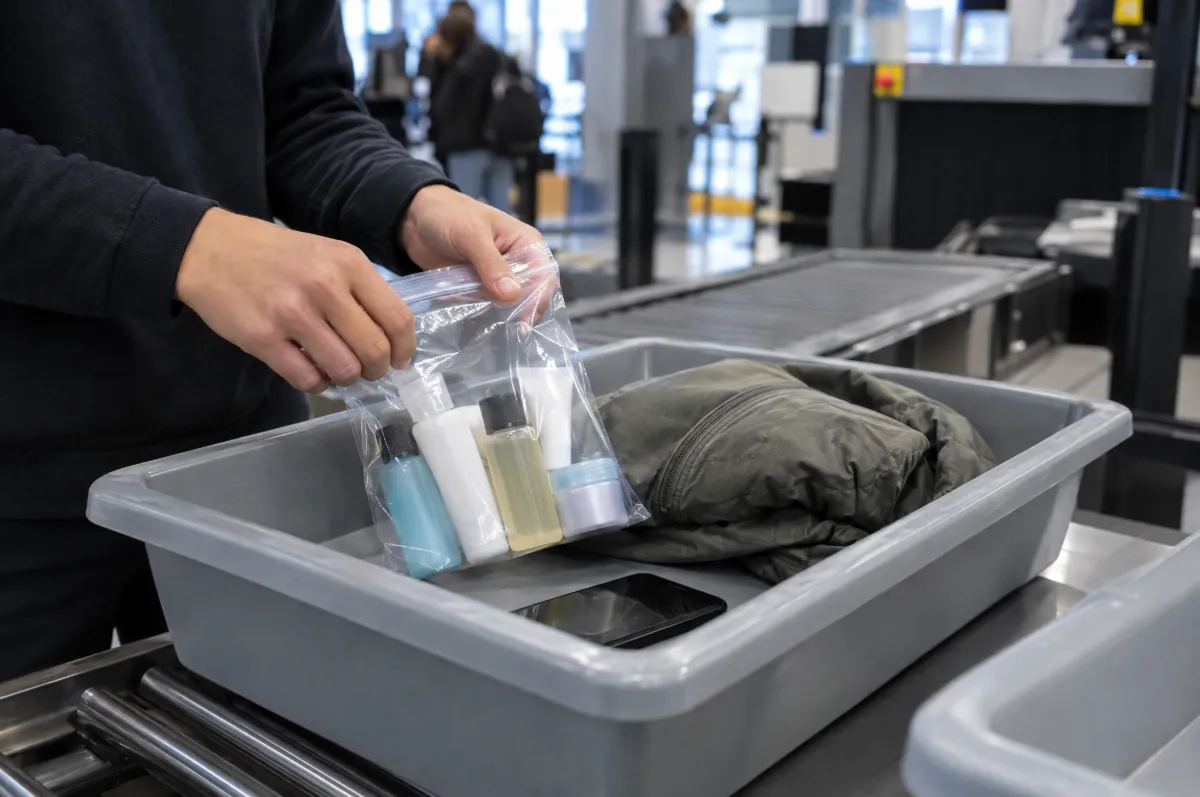
At most U.S. airport checkpoints, the TSA’s 3-1-1 rule still applies to carry-ons: liquids, gels, and aerosols in containers of 3.4 ounces (100 ml) or less, all fitting in one quart-size clear bag per person. Some checkpoints with newer scanners are more relaxed, but you can’t count on that, so check the TSA’s liquids rule before you fly. Airports abroad set their own rules too, so pack as if the 100 ml limit applies on the way home.
A few tips:
- Medications: medically necessary liquids are allowed in larger amounts, but tell the officer at screening. Keep prescriptions in their original bottles, and carry a copy of the prescription.
- Buy, don’t pack: shampoo, sunscreen, and toothpaste are easy to find almost anywhere. Bring travel sizes and top up there.
- Skip the full-size bottles: they’re heavy and they leak. Solid shampoo bars and toothpaste tablets are handy if you’re traveling carry-on only.
Electronics, Chargers and Plug Adapters
The U.S. uses 120-volt power. Most of the world, including the three countries on our upcoming trips, uses 230 volts and different plug shapes:
| Country | Plug type | Voltage |
|---|---|---|
| United States | A and B | 120 V |
| Egypt | C and F (two round pins) | 230 V |
| Ireland | G (three rectangular pins) | 230 V |
| Germany | C and F (two round pins) | 230 V |
A universal adapter covers all of these. Most phone and laptop chargers are dual-voltage (look for “100–240V” on the label), so they only need an adapter. Hair dryers and straighteners are often 120-volt only and can burn out on European power. Leave them home, since most hotels provide a hair dryer.
Power banks and spare lithium batteries must go in your carry-on, never in checked luggage. The FAA’s battery rules limit most of them to 100 watt-hours, and some airlines restrict how many you can bring.
Clothes: Pack for the Climate, Not the Calendar
The weather where you’re going matters more than the season at home. A few examples from our 2027 trips:
- Egypt in late January: warm, sunny afternoons and cold early mornings, with Cairo averaging about 66°F by day and 46°F at night. Pack light layers, a warm fleece, sun protection, and modest clothing for mosques and markets. Our guide to the best time to visit Egypt has a full month-by-month weather table.
- Ireland in March: cool and damp. Dublin averages about 50°F by day and 37°F at night, with some rain on around half the days. A waterproof jacket with a hood beats an umbrella on a windy cliff top.
- Germany in June: mild and changeable, with Munich averaging about 70°F by day and 50°F at night, and showers on many days. Pack a light rain jacket and shoes you can walk in all day, especially for the climb up to the castle on a trip to Neuschwanstein.
Whatever the destination, a simple capsule works well: neutral pants or skirts you can mix with a handful of tops, one warm layer, one rain layer, and one outfit that works for a nice dinner. Clothes you can wash in a hotel sink and dry overnight are worth their weight in gold.
Shoes deserve their own line: bring two pairs of comfortable, broken-in walking shoes, so one can dry out if the other gets wet. New shoes on a walking-heavy trip are a recipe for blisters.
Packing Tips for Group Tours
Traveling with a group changes your packing a little, mostly for the better. Going on your own? Read our guide to group trips for solo travelers.
- One suitcase you can lift yourself. Check your tour’s luggage guidelines. Some hotels, including a few in Egypt, don’t have elevators, so you may need to carry your bag up a flight of stairs.
- A small overnight bag. On trips with an overnight train, like the sleeper train on our Egypt trip, it’s much easier to pack pajamas, toiletries, medications, and a charger in a small bag than to open your suitcase in a tiny cabin.
- A daypack. For water, a layer, sunscreen, and your camera on long sightseeing days.
- Less “just in case.” Your guide and fellow travelers are a good backup for small forgotten items. That’s one of the perks of a group, especially a smaller one. Our post on small group tours vs large group tours explains why first-timers often find a group easier.

Common Packing Mistakes First-Timers Make
- Packing for every possible scenario. You’ll wear your favorite few outfits on repeat anyway.
- Putting medications or valuables in checked luggage. Keep them with you.
- Forgetting an adapter, or bringing a 120-volt hair tool that won’t survive the trip.
- Brand-new shoes. Break them in at home first.
- Leaving no room for souvenirs. Start with your suitcase about three-quarters full.
- Not checking passport dates until a few weeks before the trip. Renewals can take a while, so check months ahead.
Quick Checklist Before You Zip the Suitcase
- Passport (valid six months or more), visa or travel authorization if needed, copies
- Travel insurance details and trip documents
- Two cards, a little cash, and your bank’s international phone number
- Medications in original containers, plus extras
- Phone, charger, power bank (carry-on), universal adapter
- Comfortable walking shoes (two pairs), rain layer, warm layer
- Quart-size liquids bag, travel-size toiletries, sunscreen
- Daypack, refillable water bottle, small overnight bag
Print it, screenshot it, or save it to your phone. Running through this international travel packing list the night before you leave takes five minutes and saves a lot of stress later.
Frequently Asked Questions
What should I pack for my first international trip?
Start with the essentials you can’t replace: passport, cards, cash, medications, and travel insurance details, all in your carry-on. Then add comfortable walking shoes, layers suited to the climate, a universal plug adapter, chargers, and a small toiletry kit. Most other things can be bought when you arrive, and the international travel packing list above walks through each category.
Do I need a plug adapter or a voltage converter?
Usually just an adapter. Most phone and laptop chargers work on 100 to 240 volts, so a plug adapter is enough. Single-voltage appliances like many U.S. hair dryers need a converter, or are better left at home.
Can I bring a power bank on an international flight?
Yes, but only in your carry-on, never in checked bags. Most power banks are under the FAA’s 100 watt-hour limit, and some airlines restrict how many you can carry, so check with your airline.
How much luggage should I bring on a group tour?
One medium suitcase you can lift on your own, plus a daypack, is plenty for most trips. Check your tour’s luggage guidelines, and remember you may need to carry your bag up stairs at some hotels.
How long does my passport need to be valid?
It depends on the country. Egypt requires six months of validity, and Germany and other Schengen countries require at least three months beyond your departure date. Aiming for six months covers most destinations, but always check the State Department’s page for your destination.
What should I not pack for international travel?
Skip full-size toiletries, 120-volt hair tools, expensive jewelry, brand-new shoes, and more than a week’s worth of clothes. Never pack medications, valuables, or spare batteries in checked luggage.
Ready to put your packing list to use? Browse our upcoming group trips to Egypt, Ireland, and Germany, or send us your questions. We’re happy to help you get ready.
Upcoming group trips


Not sure which trip is right for you?
Tell us how you like to travel and we'll help you find the right group, dates and budget.
More travel tips

Group Trips for Solo Travelers: How to Travel Alone Without Being Alone
No travel buddy? No problem. Here's how group trips work when you're traveling solo, from single supplements to making friends on day one.
October 23, 2026 · 7 min read

Planning a Trip to Neuschwanstein: Visiting the Real-Life Disney Castle
The castle that inspired Disneyland's Sleeping Beauty Castle is even better in person. Here's how tickets, tours and timing work, and how to make the most of your visit.
October 21, 2026 · 7 min read

Best Time to Visit Egypt: A Month-by-Month Guide
Egypt can be mild and sunny or well over 100°F, depending on when you go. Here's what each month is really like, and when we think you should visit.
October 20, 2026 · 8 min read